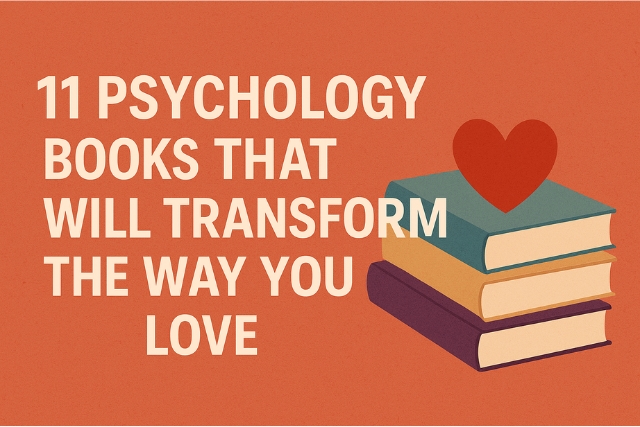
Love is one of the most beautiful — and complex — emotions we experience. But understanding how and why we love can make all the difference in building healthy, fulfilling relationships.
Psychology gives us powerful insights into communication, attachment, empathy, and healing — all essential for deeper connection. Whether you’re single, dating, or married, these 11 psychology books about love will completely change how you see relationships, yourself, and others. 🧠💗
📖 1. Attached: The New Science of Adult Attachment by Amir Levine and Rachel Heller
This groundbreaking book explores attachment theory — explaining why some people crave closeness, others avoid it, and how these patterns shape your love life.
Once you understand your attachment style, you can communicate better and build more secure, balanced relationships.
💬 2. The 5 Love Languages by Gary Chapman
A timeless classic that reveals how people give and receive love differently — through words of affirmation, acts of service, gifts, quality time, or physical touch.
Learning your partner’s love language can instantly improve understanding and emotional connection.
💡 3. Men Are from Mars, Women Are from Venus by John Gray
A bestseller that breaks down how men and women often communicate and handle emotions differently. While some concepts feel dated, its core message still holds true: understanding differences builds harmony.
💞 4. Hold Me Tight by Dr. Sue Johnson
Based on Emotionally Focused Therapy (EFT), this book teaches couples how to identify negative patterns, heal emotional wounds, and create secure, lasting bonds.
It’s especially powerful for anyone wanting to rebuild trust or reignite closeness.
💭 5. Getting the Love You Want by Harville Hendrix
A transformative guide that helps partners understand each other’s unmet childhood needs — and how those needs affect adult relationships.
It’s a must-read for anyone ready to heal old wounds and turn conflict into connection.
💫 6. The Road Less Traveled by M. Scott Peck
This philosophical classic explores self-discipline, love, and spiritual growth. Peck teaches that love isn’t just a feeling — it’s a commitment to nurture your own and your partner’s emotional evolution.
🌿 7. Attached at the Heart by Barbara Nicholson and Lysa Parker
Perfect for parents and couples alike, this book connects attachment theory with everyday life. It shows how secure love starts in childhood — and how understanding that can make you more compassionate in relationships.
💖 8. The Seven Principles for Making Marriage Work by Dr. John Gottman
Dr. Gottman’s decades of research reveal the science behind successful relationships. His seven principles help couples build trust, manage conflict, and maintain lasting love.
It’s a relationship manual backed by data and heart.
🧠 9. Attached to God by Krispin Mayfield
A fascinating look at how attachment theory also applies to spirituality. It shows how your early experiences with love can shape your relationship with faith — and others.
This book is both psychological and deeply healing.
🌹 10. Maybe You Should Talk to Someone by Lori Gottlieb
A beautiful mix of storytelling and therapy, this book follows a therapist who becomes a patient herself. It offers a raw, honest look at love, loss, and what it truly means to grow emotionally.
It’s perfect for readers who love psychology wrapped in real human stories.
🌈 11. The Art of Loving by Erich Fromm
A timeless masterpiece that defines love as an art — something we must learn, practice, and nurture. Fromm’s insights on self-love, care, and maturity will completely transform how you view relationships.
💭 Final Thoughts
Love isn’t luck — it’s self-awareness, communication, and growth.
These psychology books help you understand not just others, but yourself — your patterns, your fears, and your capacity to love deeply and freely.
Start with one of these titles, take notes, reflect, and let your journey toward conscious love begin. 💕
You may also enjoy 12 Quotes on Love and Growth That Will Change How You See Relationships.
Discover more relationship research and insights at The Gottman Institute.