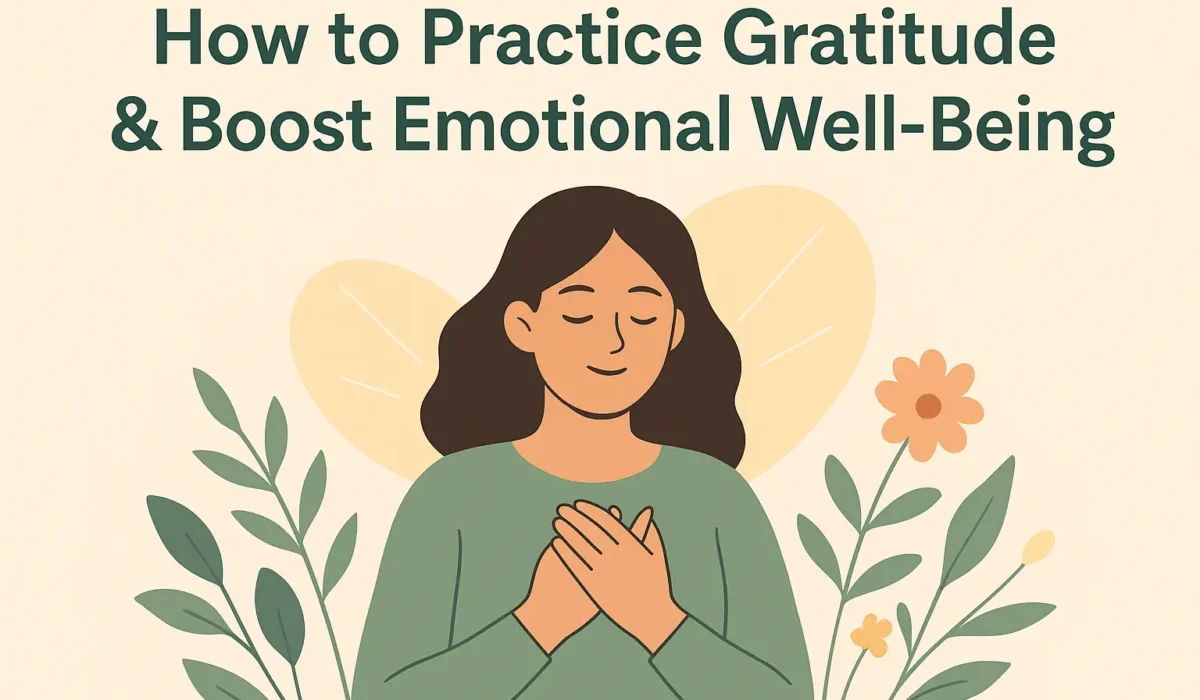
Learning how to practice gratitude and boost emotional well-being is a transformative approach to enhancing your mental health and overall happiness. By intentionally focusing on the positive aspects of your life through gratitude, you can shift your mindset, reduce stress, and improve emotional resilience. Incorporating gratitude practices into your daily routine is one of the most effective ways to foster sustained emotional well-being.
Why Practice Gratitude?
Practicing gratitude rewires the brain to notice and value positive experiences. It increases dopamine and serotonin levels—the brain chemicals responsible for happiness and contentment. Research has shown that people who regularly practice gratitude tend to be more optimistic, sleep better, and enjoy stronger relationships.
Learn more about cultivating a positive mindset in our guide on How to Cultivate a Growth Mindset.
Simple Ways to Practice Gratitude Daily
1. Keep a Gratitude Journal
Write down three to five things you are grateful for each day. Reflecting on specific moments or people encourages a positive mindset and emotional boost.
2. Express Appreciation to Others
Verbalize or write notes thanking those who’ve positively impacted you. This strengthens social bonds and spreads positivity.
3. Practice Mindful Gratitude
During meditation or quiet moments, focus on the things you appreciate in your life and fully embrace the feelings of thankfulness.
Try guided mindfulness meditation with apps like Headspace or Calm.
4. Use Gratitude Prompts
Use questions like “What made me smile today?” or “What am I thankful for in my work?” to guide your gratitude practice.
5. Create Visual Reminders
Place photos, quotes, or objects that remind you of things you’re grateful for around your space to reinforce daily appreciation.
How Gratitude Boosts Emotional Well-being
Gratitude promotes emotional well-being by decreasing the frequency of negative thoughts and increasing satisfaction. It enhances self-esteem and reduces symptoms of depression and anxiety by fostering a positive outlook.
Research published in the Journal of Positive Psychology supports that gratitude interventions lead to improved mental and emotional health outcomes.
Tips for Cultivating a Sustainable Gratitude Practice
- Make gratitude a daily routine, preferably at a fixed time.
- Share your gratitude practice with friends or groups for motivation.
- Be specific and genuine about what you are grateful for.
Conclusion
Mastering how to practice gratitude and boost emotional well-being can enrich your mental health and overall quality of life. Start small with daily journaling or mindful appreciation and watch as your emotional outlook gradually transforms, creating a happier and healthier you.