Understanding the Need for Validation
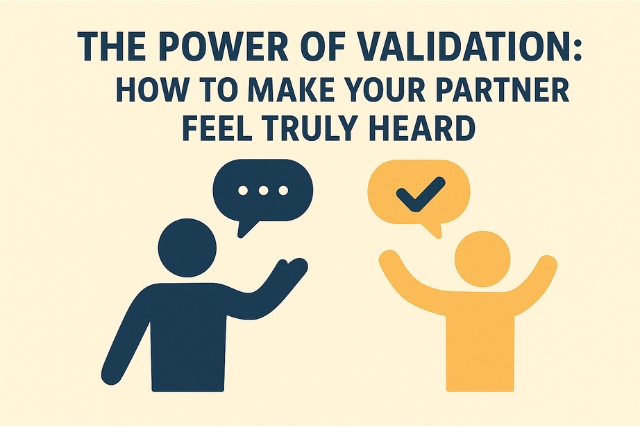
Every human being has an innate desire to be seen, heard, and understood — especially in relationships. Validation is the simple yet profound act of acknowledging your partner’s thoughts, emotions, and experiences without judgment. It tells them, “I get you, and your feelings matter.”
When partners feel validated, it creates emotional safety, deepens trust, and strengthens the bond — turning communication into true connection.
💬 What Validation Really Means
Validation doesn’t mean agreeing with everything your partner says. It means showing empathy and respect for their perspective, even when it differs from yours.
For example:
- ❌ Invalidation: “You’re overreacting again.”
- ✅ Validation: “I can see that this situation really upset you. Tell me more.”
That small shift in language transforms defensiveness into dialogue.
💖 Why Validation Strengthens Relationships
Here’s what happens when you consistently validate your partner:
- Emotional Safety Grows – When your partner feels safe expressing feelings, honest communication becomes easier.
- Conflict Decreases – Validating emotions prevents arguments from escalating, because both people feel respected.
- Intimacy Deepens – Emotional validation leads to vulnerability, which is the foundation of lasting intimacy.
- Trust Builds Naturally – Validation shows reliability and understanding — two key elements of trust.
🪞How to Practice Validation in Daily Life
Here are simple ways to make your partner feel truly heard every day:
- Listen Without Interrupting 👂
Let them finish speaking before you respond. Silence communicates attention. - Reflect Back What You Hear 💬
Try saying, “So what I’m hearing is…” or “It sounds like you feel…” - Acknowledge Their Feelings ❤️
Even if you don’t agree, say something like, “I understand why that would make you feel frustrated.” - Avoid Problem-Solving Too Soon 🧩
Sometimes your partner doesn’t want advice — just to be heard. Ask first: “Do you want me to just listen or help find a solution?” - Show Physical or Verbal Reassurance 🤝
A simple hug or saying “I’m here for you” can validate feelings more than long conversations.
🌱 The Difference Between Sympathy and Validation
- Sympathy says: “I feel bad for you.”
- Validation says: “Your feelings make sense.”
Validation empowers your partner instead of pitying them. It shows emotional maturity — a crucial trait in healthy relationships.
💫 When Validation Becomes a Habit
Over time, validation turns into an unspoken language of love. You’ll notice fewer misunderstandings, deeper conversations, and a stronger emotional connection.
When both partners practice it, validation becomes a cycle of empathy — a shared space where both people feel valued and understood.
🧭 Final Thoughts
The power of validation lies in its simplicity. You don’t need grand gestures to make your partner feel loved — just a genuine willingness to listen, understand, and accept their emotions.
So the next time your partner opens up, pause and listen fully. In that moment, you’re not just hearing words — you’re healing hearts. 💞