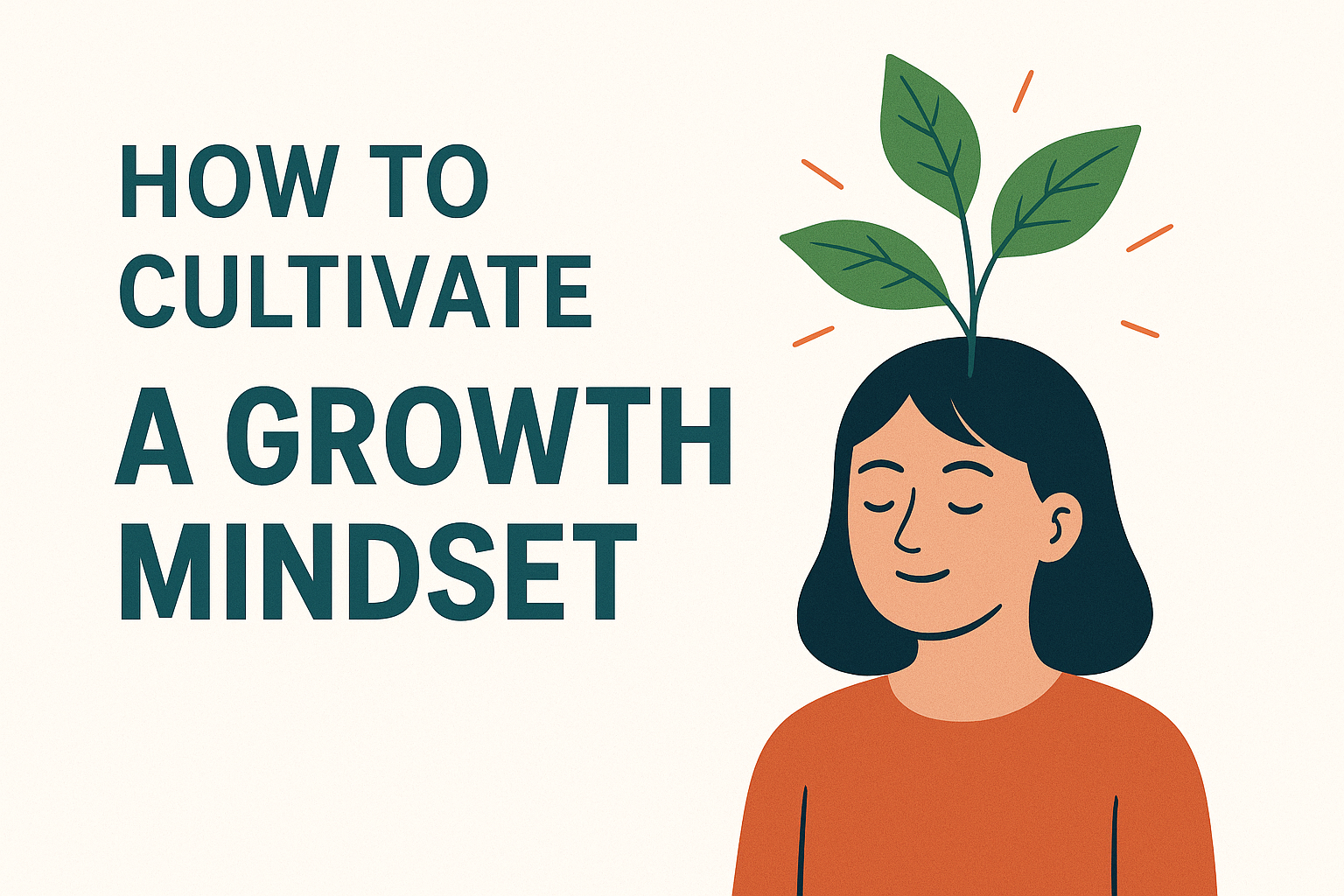
Your mindset shapes your world. The way you think about challenges, failures, and effort determines how far you’ll go in life. People with a growth mindset believe that skills and intelligence can be developed through dedication, learning, and perseverance — while those with a fixed mindset see abilities as static.
In this article, you’ll discover how to cultivate a growth mindset, overcome self-doubt, and reprogram your thinking for continuous improvement and success.
👉 Related Read: Overcoming Negative Thinking: A Step-by-Step Mindset Detox
💡 What Is a Growth Mindset?
The term “Growth Mindset” was popularized by psychologist Dr. Carol Dweck, who found that people’s beliefs about their abilities shape their behavior and success.
- A fixed mindset says: “I’m either good at this or I’m not.”
- A growth mindset says: “I can get better with effort and practice.”
When you shift to a growth mindset, failure becomes feedback, effort becomes progress, and learning becomes lifelong.
(External Reference: Stanford University – Carol Dweck on Growth Mindset)
🌻 Benefits of Developing a Growth Mindset
- Resilience in Tough Times – You see setbacks as opportunities to grow.
- Higher Motivation – You believe effort will pay off.
- Better Relationships – You handle feedback and criticism positively.
- Continuous Learning – You stay curious and open to new ideas.
- Greater Success – You push limits instead of avoiding challenges.
🧭 How to Cultivate a Growth Mindset (Step-by-Step)
Step 1: Recognize Fixed Mindset Triggers
Start by noticing when you fall into fixed-mindset thinking — such as saying, “I’m just not good at this.”
Replace those thoughts with: “I’m learning and getting better every day.”
💬 Example: Instead of “I failed,” say “I learned what doesn’t work.”
Step 2: Embrace Challenges
Every challenge is a stepping stone to growth. Avoiding challenges limits potential; embracing them builds confidence.
- Try something new each week.
- Seek tasks that stretch your comfort zone.
- Reflect on what each experience teaches you.
👉 Related Post: Vision Boards That Actually Work: A Practical Guide
Step 3: Reframe Failure as Feedback
Failure is not final — it’s data. It tells you what to adjust.
- Analyze what went wrong.
- Apply those lessons to your next attempt.
- Celebrate the effort, not just the outcome.
(External Resource: Forbes – Why Failing Forward is the Key to Success)
Step 4: Cultivate Curiosity
Ask more questions. Curiosity opens doors to growth and innovation.
- Read books and blogs on topics outside your comfort zone.
- Ask “What can I learn from this?” instead of “Why did I fail?”
- Surround yourself with curious, open-minded people.
Step 5: Practice Self-Compassion
Growth requires patience. Be kind to yourself when you struggle.
- Replace self-criticism with encouragement.
- Treat yourself like you’d treat a friend who’s learning something new.
- Remember: mastery is a journey, not a race.
👉 You may also like: Building Support Systems for Success
Step 6: Celebrate Progress
Acknowledge how far you’ve come.
- Keep a “growth journal” where you record lessons learned.
- Celebrate effort and persistence, not just wins.
- Use small victories as motivation to keep going.
Step 7: Surround Yourself with Growth-Oriented People
Your environment shapes your mindset.
- Connect with people who inspire and challenge you.
- Avoid negativity and comparison traps.
- Join online communities that value growth and learning.
(External Link: Mindset Works – Tools for Developing a Growth Mindset)
⚙️ Real-Life Example
Think of athletes like Michael Jordan or entrepreneurs like Elon Musk — both faced failures but viewed them as lessons. Their mindset turned setbacks into stepping stones toward mastery.
When you cultivate the same outlook, you unlock your full potential.
🧩 Quick Summary Table
| Step | Action | Outcome |
|---|---|---|
| 1 | Recognize fixed mindset patterns | Greater self-awareness |
| 2 | Embrace challenges | Improved confidence |
| 3 | Reframe failure as feedback | Faster growth |
| 4 | Stay curious | Lifelong learning |
| 5 | Be self-compassionate | Emotional resilience |
| 6 | Celebrate progress | Motivation boost |
| 7 | Surround yourself with growth-minded people | Continuous improvement |
🌟 Final Thoughts
Cultivating a growth mindset is a daily practice — not a one-time shift. The more you challenge your limits and celebrate effort, the more confident and capable you become.
Start today:
- Learn something new.
- Take on a challenge.
- Reflect on your progress.
Over time, you’ll see that success isn’t about being perfect — it’s about growing forward. 🌱