We’ve all been there — staring at a to-do list that feels impossible to start.
You know what needs to be done, but somehow you keep putting it off.
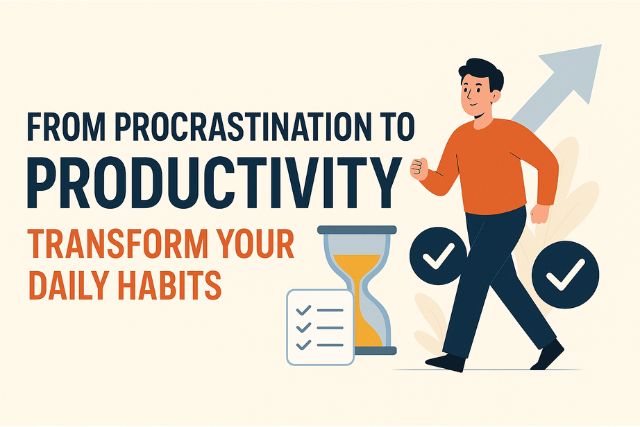
That silent thief of success? Procrastination.
The good news: procrastination isn’t laziness. It’s a habit of avoidance.
And like any habit, it can be reprogrammed.
In this article, we’ll break down how to move from endless delay to unstoppable productivity — step by step.
Whether you’re a student, professional, or entrepreneur, this guide will help you take control of your time, energy, and results.
1. Why We Procrastinate (It’s Not About Laziness)
Psychologists describe procrastination as an emotional regulation problem, not a time management issue.
You delay tasks not because you don’t have time — but because they trigger discomfort: fear of failure, perfectionism, or overwhelm.
When your brain senses discomfort, it switches to avoidance mode — seeking instant relief through distractions.
Before building new habits, read our post Overcoming Negative Thinking: A Step-by-Step Mindset Detox to clear the mental clutter that feeds procrastination.
2. The Psychology of Procrastination
According to Dr. Tim Pychyl from Carleton University, procrastination is “a form of self-harm.”
It feels good in the short term but damages your goals long term.
Here’s what happens neurologically:
- Your limbic system (emotional brain) seeks pleasure now.
- Your prefrontal cortex (logic brain) wants long-term growth.
When the two conflict, emotions usually win — unless you train your focus muscle.
🧠 External Resource: Learn more about procrastination science from American Psychological Association.
3. The Domino Effect: Small Wins Create Momentum
Productivity isn’t about giant leaps — it’s about tiny, consistent actions that compound over time.
Think of your day like a row of dominoes. Knock down one small task, and it triggers motivation for the next.
“You do not rise to the level of your goals. You fall to the level of your systems.” — James Clear
💡 Pro Tip: Start with your easiest or most meaningful task (known as the “Momentum Task”). Completing it rewires your brain for progress.
4. Step-by-Step Framework to Beat Procrastination
Step 1: Identify the Root Cause
Ask yourself:
- Am I avoiding discomfort?
- Am I overwhelmed by the size of the task?
- Do I lack clarity about what to do next?
Once you know why you’re avoiding something, the solution becomes clear.
Step 2: Use the 2-Minute Rule
Coined by productivity expert David Allen, the rule states:
“If a task takes less than two minutes, do it immediately.”
This breaks inertia — because starting is the hardest part.
Small actions lead to motion, and motion builds momentum.
Step 3: Break Big Goals into Micro-Tasks
The brain hates vagueness.
“Finish project” feels impossible, but “Write first paragraph” feels doable.
See our post How to Set Effective SMART Goals and Achieve Them for structuring your goals into clear, actionable steps.
Step 4: Schedule Deep Work Time Blocks
Create distraction-free windows where you focus intensely for short periods — like Pomodoro sessions (25 minutes of work, 5 minutes of rest).
This method prevents burnout and keeps your brain sharp.
📱 External Tool: Try Pomofocus.io for free online Pomodoro timers.
Step 5: Reward Progress, Not Perfection
Rewarding effort helps your brain associate productivity with pleasure.
Instead of waiting until the project is complete, celebrate milestones.
This boosts dopamine — the motivation chemical that keeps you going.
🎯 Example: “Once I finish two sections, I’ll enjoy a walk or a coffee.”
5. Mindset Shifts to Eliminate Chronic Procrastination
✅ Perfectionism Isn’t Productivity
Striving for “perfect” often keeps you from finishing anything.
Done is better than perfect — because progress creates clarity.
✅ Discomfort Is a Sign of Growth
Feeling resistance doesn’t mean you’re failing — it means you’re stretching.
The most successful people act despite fear, not without it.
✅ Self-Compassion Fuels Motivation
Research shows that beating yourself up for procrastinating only makes it worse.
Be kind to yourself — forgive, reset, and restart.
6. The Power of Environment Design
Your environment silently shapes your habits.
To boost focus:
- Keep your phone in another room.
- Declutter your workspace.
- Use website blockers (like Freedom.to) to stay distraction-free.
Even small changes — like better lighting or calming music — can improve focus by 20–30%.
7. Build Anti-Procrastination Habits
Here are five habits to train your brain for action:
- Daily Planning: Spend 10 minutes every morning mapping your 3 top priorities.
- Evening Reflection: Review what went well and what needs adjusting.
- Time Tracking: Use tools like Toggl to identify hidden time leaks.
- Accountability: Tell someone your goals — social pressure builds consistency.
- Visual Cues: Keep motivational quotes or progress charts visible in your workspace.
Read How to Track Progress and Celebrate Small Wins to measure your daily momentum.
8. The Eisenhower Matrix: Prioritize What Truly Matters
Not all tasks are created equal.
Use the Eisenhower Matrix to separate urgency from importance:
| Quadrant | Description | Example |
|---|---|---|
| Urgent & Important | Do immediately | Client deadline |
| Important, Not Urgent | Schedule it | Exercise, learning |
| Urgent, Not Important | Delegate | Routine admin tasks |
| Not Urgent & Not Important | Eliminate | Mindless scrolling |
Dive deeper into our post Eisenhower Matrix: Prioritize Your To-Do List for a complete guide.
9. Morning Rituals for Maximum Focus
Successful people don’t rely on motivation — they rely on routines.
Design a morning ritual that primes your brain for focus.
Example:
- Wake up early and hydrate.
- 10 minutes meditation.
- Review top 3 priorities.
- 30 minutes deep work before checking email.
🧘♀️ External Link: Learn how morning rituals impact performance — Psychology Today on Morning Routines.
10. The 1% Rule: Progress Over Perfection
Improvement doesn’t happen overnight.
If you get 1% better every day, you’ll be 37 times better after a year.
Focus on tiny gains — one productive action today is worth more than a perfect plan tomorrow.
“Small disciplines repeated with consistency every day lead to great achievements over time.” — John C. Maxwell
Conclusion
Procrastination is not a permanent flaw — it’s a temporary pattern.
And with awareness, strategy, and consistent habits, you can rewire your brain for action.
Start small.
Do one thing today your future self will thank you for.
Because success isn’t about doing everything — it’s about doing the right things, consistently.
Your productivity revolution starts now. 🚀