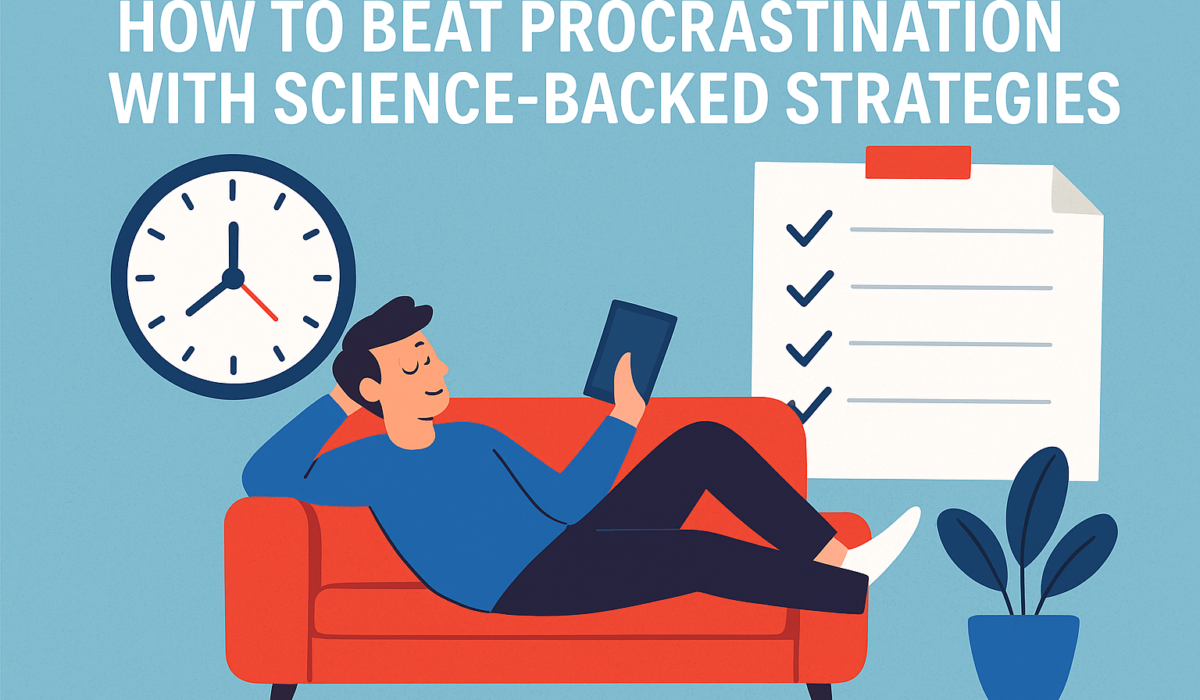
Procrastination is a common challenge that affects productivity and well-being. Learning how to beat procrastination is essential for achieving personal and professional goals. Fortunately, scientific research offers evidence-based strategies that can help you overcome this habit and improve your effectiveness.
Understanding Procrastination
Procrastination is the act of delaying or avoiding tasks despite knowing there will be negative consequences. It often stems from fear of failure, perfectionism, or a lack of motivation. The good news is that the brain’s plasticity allows for new habits and behaviors to be developed with consistent effort.
Science-Backed Strategies to Beat Procrastination
1. Break Tasks into Smaller Steps
Research shows breaking large tasks into manageable steps reduces overwhelm and increases motivation to start. According to a study published in the Journal of Behavioral Medicine, task breakdown improves adherence to goals.
2. Use the Pomodoro Technique
The Pomodoro Technique, involving focused 25-minute work intervals followed by short breaks, has been found to improve concentration and reduce mental fatigue. This technique helps reduce procrastination by creating a sense of urgency.
For details on Pomodoro apps, visit Focus Booster.
3. Employ Implementation Intentions
Formulating specific “if-then” plans, such as “If it’s 9 a.m., then I will start my report,” greatly increases the likelihood of action. This technique leverages cue-action associations in the brain.
Learn more about implementation intentions at Psychology Today.
4. Minimize Distractions
Studies suggest environmental factors significantly influence procrastination. Design a workspace with minimal distractions, and use tools like Freedom or StayFocusd to block distracting websites.
5. Practice Self-Compassion
Being kind to yourself reduces anxiety associated with procrastination. Research in the Journal of Experimental Psychology shows self-compassion fosters motivation and persistence.
6. Set Clear Deadlines
Clearly defined deadlines create external pressure to act. A study in the Journal of Applied Psychology confirmed that deadline setting enhances task completion rates.
Additional Tips
- Reward progress with small incentives to reinforce task completion.
- Track your time and productivity to identify patterns.
- Seek support or accountability from peers or mentors.
Conclusion
Learning how to beat procrastination using science-backed strategies empowers you to take control of your habits and productivity. By breaking tasks down, managing distractions, using structured techniques, and cultivating self-compassion, you can overcome procrastination and achieve your goals. Start applying these approaches today for lasting change.