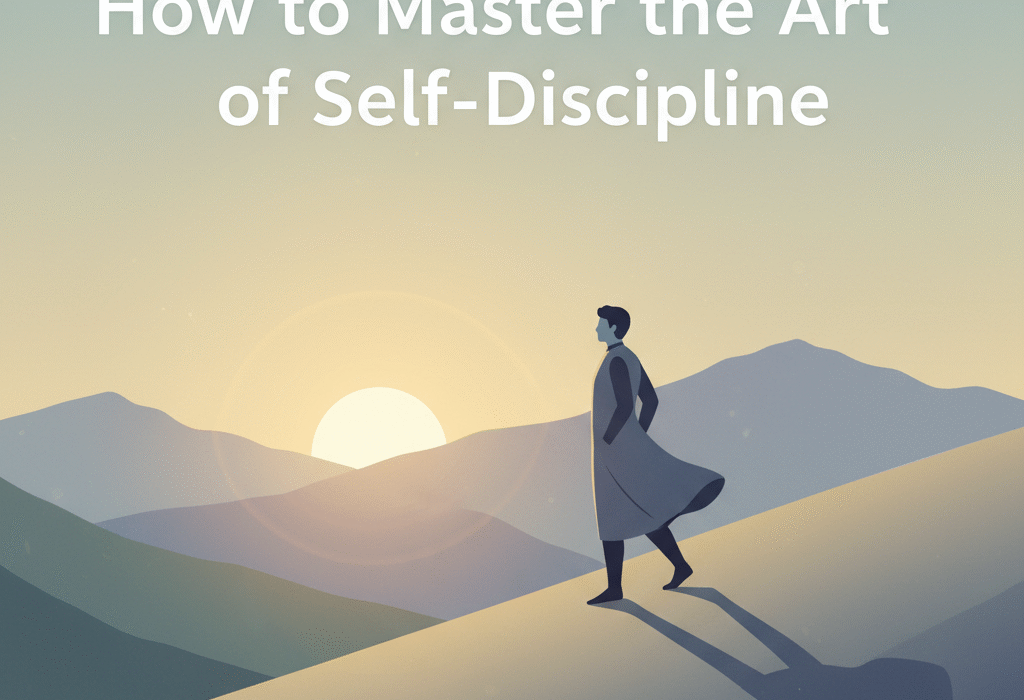
When it comes to achieving success—whether in your career, studies, or personal goals—self-discipline always beats motivation. Motivation gets you started; self-discipline keeps you going when motivation fades.
Think of it as a muscle. The more you train it, the stronger it becomes. But most people never build it because they expect results overnight.
In this article, we’ll explore how to master the art of self-discipline, step by step, so you can take control of your habits, emotions, and goals—no matter what life throws your way.
🔍 What Is Self-Discipline, Really?
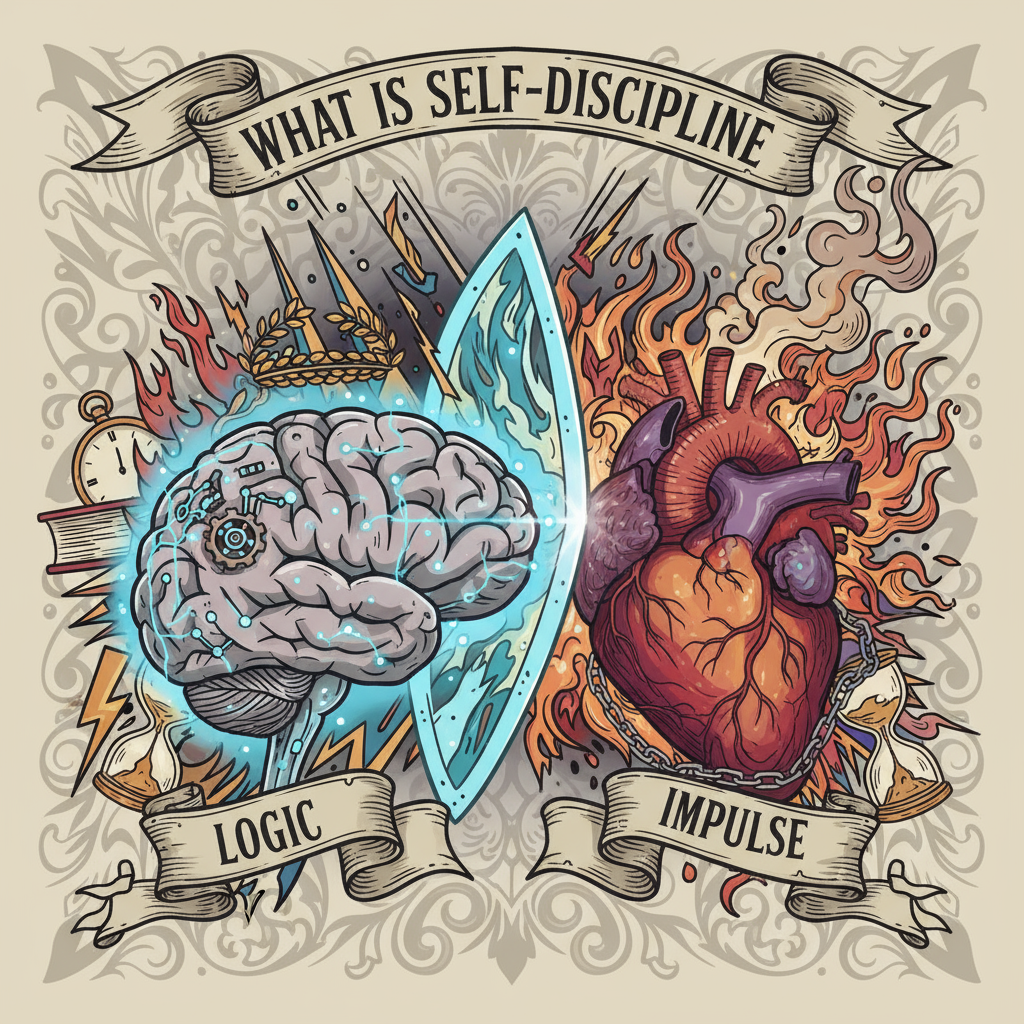
Self-discipline is your ability to do what needs to be done, even when you don’t feel like it.
It’s not about being harsh on yourself; it’s about building the strength to act in alignment with your goals, not your moods.
“Discipline is choosing between what you want now and what you want most.” — Abraham Lincoln
When you develop true self-discipline, you:
- Follow through on commitments
- Avoid distractions and temptations
- Build trust in yourself
- Turn good intentions into lasting habits
🧩 The Psychology Behind Self-Discipline
According to research from Stanford University, self-discipline is one of the strongest predictors of long-term success—more than IQ or talent.
The brain’s prefrontal cortex plays a crucial role here. It’s the part responsible for decision-making and impulse control. Every time you resist an urge or delay gratification, you strengthen this part of your brain.
External Link:
⚙️ Step 1: Define Your “Why” Clearly
Every act of discipline begins with a powerful why.
Ask yourself:
- Why do I want to achieve this?
- What will my life look like if I stay disciplined for one year?
- What will it cost me if I don’t?
When your why is strong enough, your discipline grows naturally.
Pro tip: Write your why on a sticky note and keep it visible—on your desk, your mirror, or your phone wallpaper.
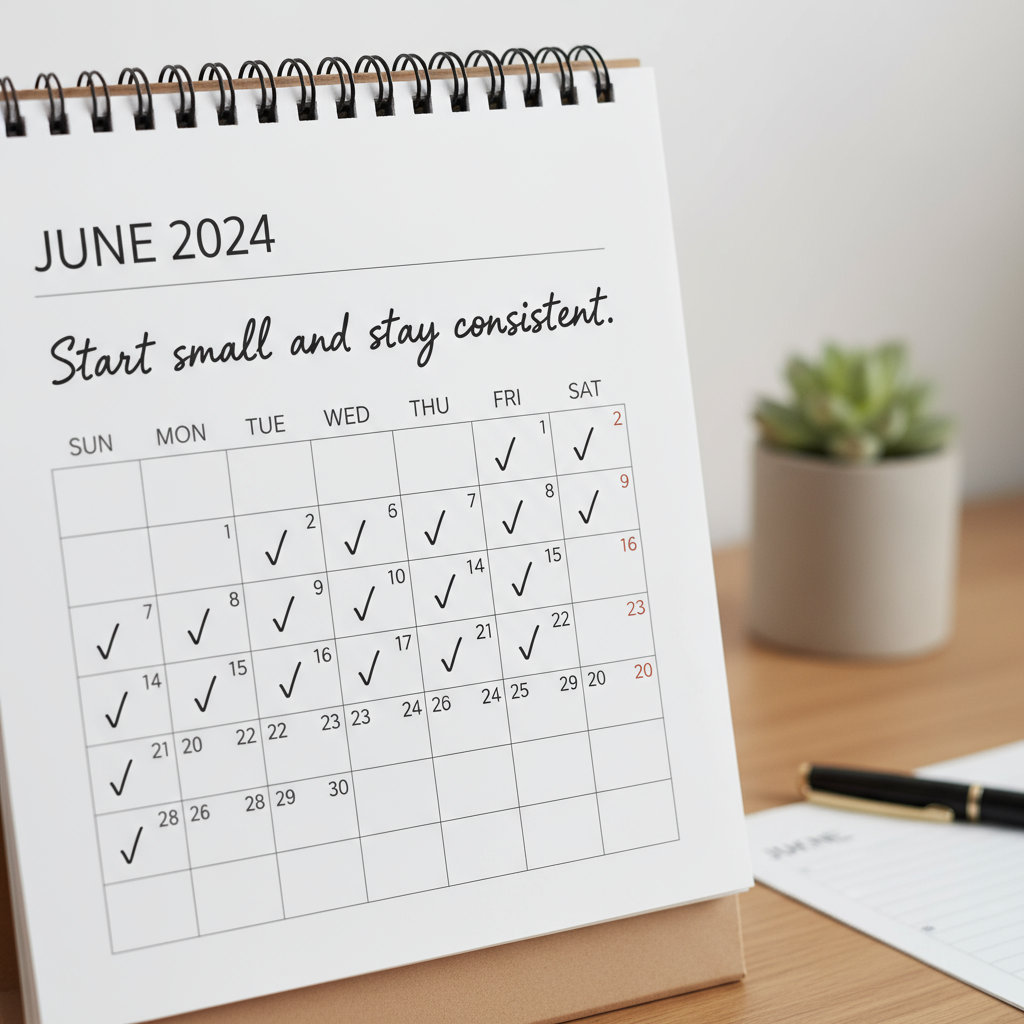
🗓 Step 2: Start Small and Stay Consistent
Forget perfection. Consistency is the real superpower.
If you want to develop discipline, start with micro-habits. Instead of aiming to read for an hour daily, start with 10 minutes.
Internal Link:
- Read our guide on How to Build Habits That Actually Stick
Over time, your consistency compounds—just like interest in a savings account.
🕹 Step 3: Master the 5-Minute Rule
The 5-Minute Rule is simple: when you feel resistance, commit to doing the task for just five minutes.
Once you begin, your brain’s inertia fades, and continuing becomes easy. It’s a psychological trick that breaks procrastination loops instantly.
You don’t need to conquer an entire mountain—just take the first step.
🚫 Step 4: Remove Temptations and Triggers
Discipline is easier when your environment supports it.
- Keep your phone away when working
- Use website blockers like Freedom or Cold Turkey
- Create a clutter-free workspace
- Prepare healthy snacks instead of junk food
Make success the default by designing your environment for discipline.
(Image suggestion: Minimalist workspace setup — “Create an environment that supports self-discipline.”)
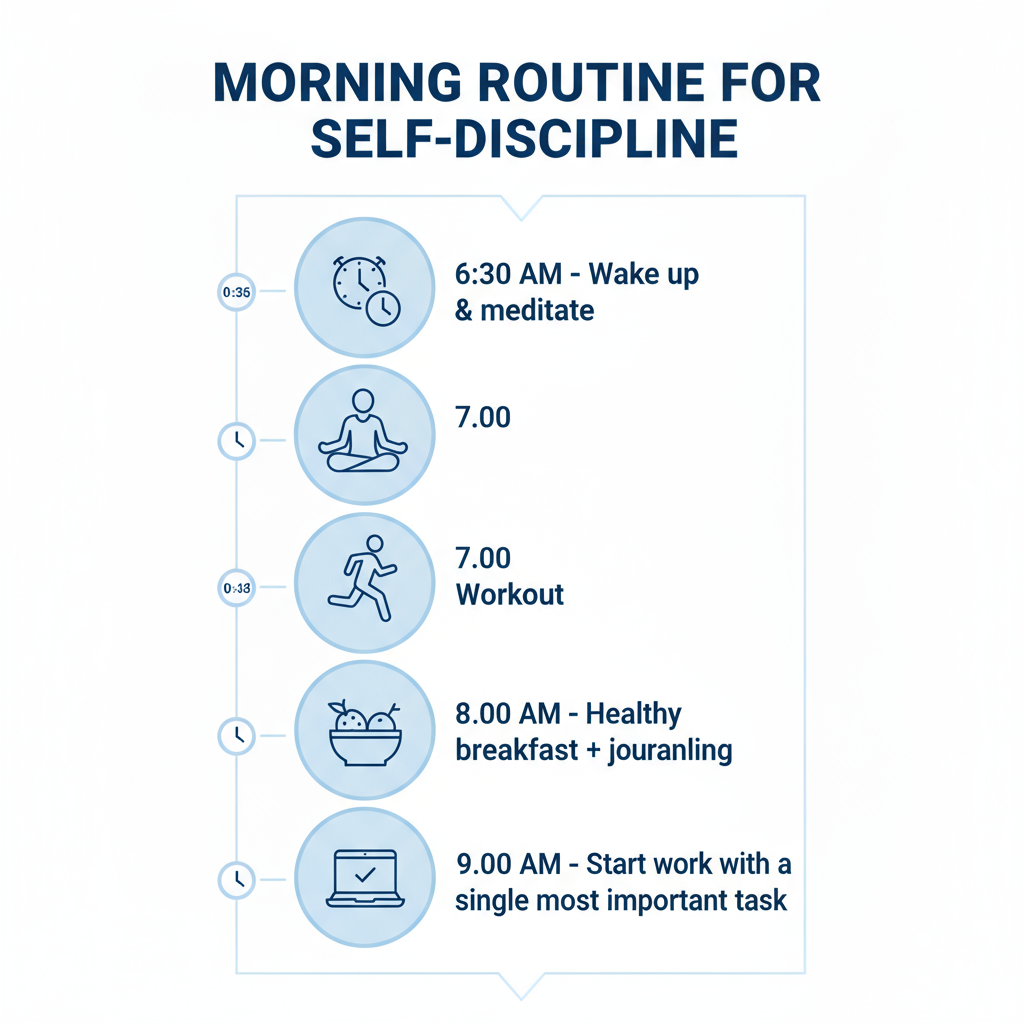
⏰ Step 5: Build Daily Routines
Routines turn discipline into autopilot.
When your mornings and evenings are structured, you reduce the mental load of decision-making.
Example Daily Routine for Professionals:
- 6:30 AM – Wake up & meditate (10 mins)
- 7:00 AM – Workout
- 8:00 AM – Healthy breakfast + journaling
- 9:00 AM – Start work with a single most important task
🧘 Step 6: Learn Emotional Regulation
The greatest enemy of discipline isn’t laziness—it’s emotion.
When stressed, anxious, or bored, your willpower drops. Learning to regulate your emotions through mindfulness, journaling, or deep breathing gives you mental control.
External Link:
Internal Link:
- Explore our article on How to Stay Calm Under Pressure
📉 Step 7: Accept Failure as Feedback
Even the most disciplined people fail sometimes. What sets them apart is how they respond.
Instead of guilt, practice reflection:
- What triggered this lapse?
- How can I prevent it next time?
- What lesson can I take from it?
Every setback becomes a stepping stone when you adopt a growth mindset.
Internal Link:
- Discover how to Cultivate a Growth Mindset
💪 Step 8: Reward Progress, Not Just Results
Most people give up because they don’t celebrate small wins.
Each time you show up consistently—reward yourself. It could be a break, a favorite snack, or simply acknowledging your effort.
(Image suggestion: Person marking progress on a wall calendar — “Celebrate small wins to build momentum.”)
🧭 Step 9: Learn from the Highly Disciplined
Study athletes, entrepreneurs, and creators who master discipline. Observe how they think and operate.
External Link:
Their success stories prove one thing: self-discipline is a skill anyone can master—with practice.
🌈 Conclusion: Discipline Is Freedom
At first, discipline feels restrictive. But in reality, discipline creates freedom—freedom from distractions, fear, and chaos.
When you master the art of self-discipline, you become unstoppable—not because life gets easier, but because you get stronger.