In a busy and often stressful world, learning simple yet effective ways to calm your mind instantly can be a game-changer. Breathing techniques are accessible tools that harness the power of conscious breath to reduce anxiety, improve focus, and promote mental clarity. Below are six scientifically backed breathing exercises that you can use anytime to restore calm and balance.
Why Breathing Techniques Work
Breathing deeply and mindfully activates the parasympathetic nervous system—the body’s natural relaxation response—helping lower heart rate, reduce cortisol levels, and alleviate mental stress. Unlike medications or apps, breathing exercises require no equipment and can be performed anywhere.
1. Box Breathing (Four-Square Breathing)
- How to do it: Inhale slowly for 4 seconds, hold breath for 4 seconds, exhale for 4 seconds, and hold again for 4 seconds.
- Benefits: Balances oxygen and carbon dioxide levels, enhances focus, and reduces stress.
- Practice for 5 cycles when feeling overwhelmed.
2. Diaphragmatic Breathing (Belly Breathing)
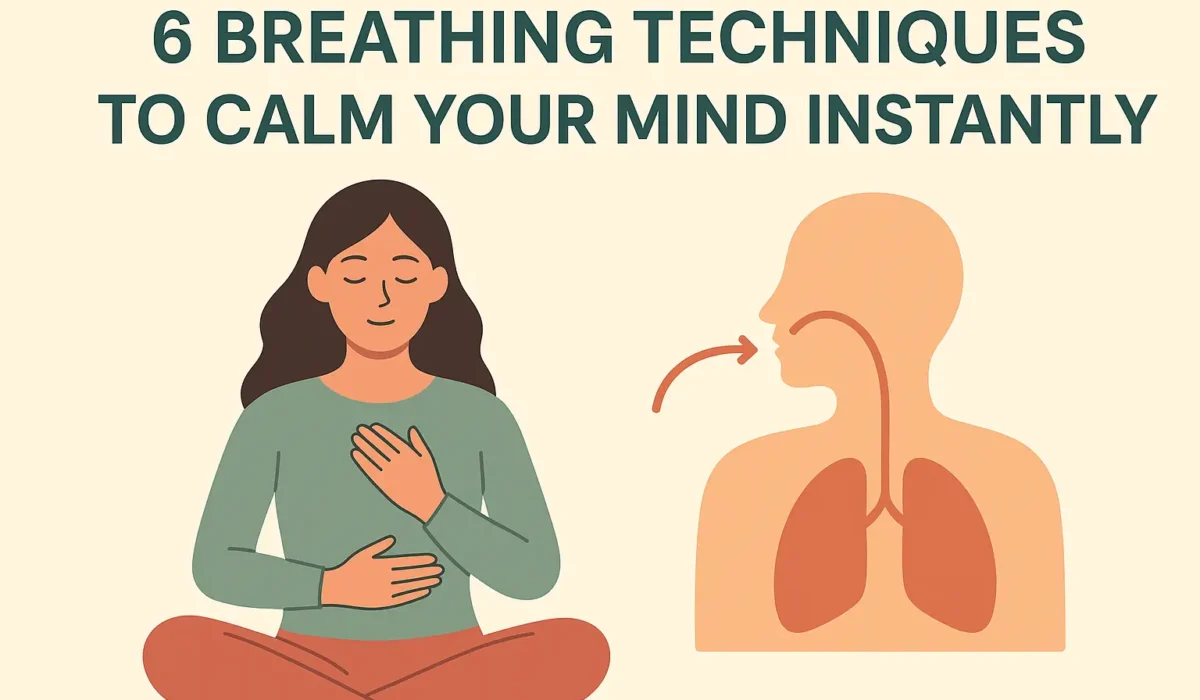
- How to do it: Place one hand on your chest and another on your belly. Inhale deeply through your nose, letting your belly expand, then exhale slowly through your mouth.
- Benefits: Engages the diaphragm, promotes deep relaxation, and decreases muscle tension.
- Ideal for gradual calming during anxiety spikes.
3. 4-7-8 Breathing
- How to do it: Inhale quietly through your nose for 4 seconds, hold your breath for 7 seconds, then exhale completely through your mouth for 8 seconds.
- Benefits: Natural tranquilizer for the nervous system, helpful for sleep and acute stress.
- Repeat for 4 cycles to improve calm.
4. Alternate Nostril Breathing (Nadi Shodhana)
- How to do it: Close your right nostril with your thumb, inhale slowly through the left nostril, close left nostril with finger, and exhale through right nostril. Then inhale through right nostril, close, and exhale left.
- Benefits: Balances hemispheres of the brain, improves concentration, and reduces stress.
- Practice for up to 5 minutes daily.
5. Resonant or Coherent Breathing
- How to do it: Breathe at a slow, steady rate of about 5 breaths per minute: inhale for 6 seconds, exhale for 6 seconds, continuously.
- Benefits: Optimizes heart rate variability, stabilizes mood and energy.
- Used in clinical settings for anxiety management.
6. Pursed Lip Breathing
- How to do it: Inhale slowly through your nose, then exhale through pursed lips like blowing out a candle, twice as long as the inhale.
- Benefits: Improves oxygen flow, helps manage shortness of breath, calms nervous system.
- Use especially in moments of panic or breathlessness.
Tips for Getting the Most from Breathing Practices
- Practice in a quiet space to minimize distractions.
- Combine breathing with mindfulness for increased presence.
- Use apps like Calm or Insight Timer for guided exercises.
- Consistency builds better nervous system regulation over time.
Internal and External Resources
- Read more about how breathwork reduces anxiety at Psychology Today.
- Explore guided respiratory exercises with the Calm app.
- Learn the science behind diaphragmatic breathing from Harvard Health Publishing.
- For practical mindfulness integration, visit Mindful.org’s breathing exercises.
- Use free breath timers and guides on Insight Timer.
Conclusion
Mastering these six breathing techniques gives you practical tools to calm your mind instantly—no matter where you are or what you face. Incorporate them into your daily routine, especially during stressful moments, to enhance emotional balance, reduce anxiety, and promote overall wellbeing naturally. Start breathing consciously today and experience how every breath becomes a step toward a calmer, clearer mind.